Archive for the ‘Screenwriting’ Category

Good Night, And Good Luck

Sunday, November 4th, 2007

I’ve got a 6:30 AM call time tomorrow, so it’s off to bed with me.

The kind of negotiating I have hoped for all along…the intense kind, with the key decision-makers huddled together in a room…news blackout…etc….is still underway.

Might work.

Might not.

When I wake up, I guess I’ll know.

If it’s a strike, then it failed.

If there’s a deal (unlikely), then it succeeded.

More likely…if the WGA agrees to postpone the strike for a limited amount of time—say a week or something like that—then it means there’s a deal in the making.

I hope I rise to good news, but I’m ready for bad.

[Five minutes after Craig posted this, the word came in: No deal was reached. - Ted]

Economics of Screenwriting

Thursday, July 26th, 2007

Craig Mazin has a great article up about The Economics of Screenwriting, which is better (and more number-specific) than anything I would have drafted.

Craig is basically a smart entertainment lawyer who happens to be a really good writer. Consider it a must-read if you’re curious how screenwriter-folk get paid.

The Economics of Screenwriting

Wednesday, July 25th, 2007

numbers.jpg
I’ve got a few articles I’ve been planning to write, but sometimes a better idea comes along and you have to roll with it. Pro writer Derek Haas suggested that I write about how we get paid, what the various terms and methods mean, and how we can expect success or failure to impact it all.

Good idea. Frankly, I had no idea what anything meant when I started, so I hope that some of you find this of value.

There are a few basic ways to get paid as a screenwriter. You can option literary material, you can sell literary material, you can pitch an idea, or you can be hired on an assignment.

Options don’t technically fall under the WGA’s jurisdiction. Options are just rental agreements. The optioner pays the optionee a fee that grants the option the exclusive right to “set up” the project at a studio (typically as a producer). The writer will then sell the literary material to the studio.

If you sell a script, the studio has to pay you scale. “Scale” is just a term for the basic minimum amount. Right now, if you sell an original screenplay for a “big budget” film (a film that costs more than $5,000,000), scale is roughly $77,000 (including one additional rewrite step). You can learn about all of the various minimums here.

Minimums aside, however, most writers work above scale.

A typical deal for a pitch or assignment works like this…you’re paid your “quote” (your going rate) for a draft and a set of revisions (aka a second draft, often shortened to “set”). In addition, the studio will typically detail optional steps they can trigger if they desire. So, if your deal is, say, $500,000 for an original, you’ll get paid $500,000 for two drafts, but the studio might hold an option for another set for $150,000 and a polish for $75,000. If they want it, that’s what they’ll pay (and you have to write it, pending your availability). If they don’t want those optional steps, they don’t have to pay that money out.

Then there’s the credit bonus. Most writing deals include a bonus for sole screenplay credit and a reduced bonus for shared screenplay credit (I’ve never heard of anyone getting a bonus for story credit).

That’s where all this “X against Y” stuff comes in.

If your quote is $500,000 against $1,000,000, that means you get paid $500,000 for those first two drafts. If you get sole screenplay credit on the movie, you’ll get an additional $500,000 to get you to the $1,000,000.

Shared credit bonuses are typically half the sole credit bonus.

When working on deals, it’s always important to know what’s applicable against the bonus and what isn’t. For instance, the optional steps are almost always considered applicable, meaning that if you’re $500,000 against $1,000,000 and the studio pays you an additional $225,000 for optional steps, that optional money cuts into the rest of the money they owe you if you get sole credit. In this case, instead of getting $500,000 to get to the million, you’d only get $275,000 in bonus money (because you’ve been paid $500 + $225 already, and 500+225+275=1M).

Therefore, once you work beyond the initial quote work and optional steps, it’s critical to ensure that new payments are not applicable against the bonus, because you never want to be in a situation where working more doesn’t get you more.

Many writers will do an “all services deal” once the film heads into production. The all services deal is a flat payment that covers all the writing the film requires until release. All services deals should always be non-applicable against the bonus, and they should be made with care. Some kind of time limit on them is usually advised, in case a film drags on and on.

Payments are typically made for commencement and delivery, with a 2/3 - 1/3 split being ideal, i.e. you get 2/3rds of the money for a particular deal step when you’re told to commence writing, and the remaining 1/3 when you turn in the draft.

All services deals are typically tied to production milestones, e.g. you get 40% at the start of prep, 40% at start of principle photography and 20% upon completion of the film.

Unfortunately, studios are infamous for “late pay.” Writers will turn in drafts and be forced to wait weeks for payment. Or, as was the case on my first job, writers are hired and told to commence writing, but even the starting payment is held up for weeks.

My easy answer on late pay is that no writer need suffer it. My position has always been “I start when I’m paid” and “I turn in my draft when I’m paid.” Simple as that. The studio likes to say they can’t officially pay commencement until a longform contract is signed, but that’s baloney. A deal memo and certificate of authorship is all that’s required.

As far as quotes go, rewriting usually pays less on a quote basis than original work. The basic rule of thumb is that a rewrite gig should earn you about 75% of your quote for an original gig.

Of course, there’s the highly-desired weekly gig, which is a whole ‘nother thing. Weeklies are when studios hire writers on a week-to-week basis, almost always for production writing. Weekly rates tend to be quite high. The studio will always try and finagle the writer toward a polish if they think one week will turn into three or four.

That’s the tug of war that makes dealmaking so much, um….fun.

So, once you have a quote, how do you improve it (or get a “bump” in the industry parlance)?

There are three basic ways to get a bump. First, sell a pitch or spec in some kind of competitive situation (more than one interested buyer). Second, write a draft that gets a green light. Third, get screenplay credit on a film that performs at the box office or earns awards.

Some basic guidelines for what writers earn. Note that these groups exclude spec sales, which, at some point, no longer affect a quote in a specific way (for instance, Rossio & Marsilii’s $5M sale for Deja Vu doesn’t mean that their quote for an original is $5M, although I think they’re both doing just fine…)

Baby Writers: No, not my term, but commonly used around town to denote writers who are either very fresh to the business or who have little experience working. Typical quote is 100 against 250.

Typical Writers: They’ve sold scripts, maybe had a movie or two made, maybe it didn’t do so well, but they’re definitely in the game. Typical quote is 300 against 600.

Known Commodities: These are writers who have multiple credits, a number of fans at studios, a good track record and a hit to their name. Typical quote is 700 against a million.

A List: These writers have hits to their names, and are known to deliver the goods for the studio. They almost always have a few key relationships with top shelf actors, directors or producers. Typical quote is $1-1.5M against $2-2.5M.

Marquee Writers: Rarified air here. You’re talking about a pretty small number of writers who aren’t employees as much as investments. They earn more than most directors do. To be in this group, you’ll need a quote of two million against…well…more. Three million? Something like that.

I’m sure I’ve left out plenty. And it’s quite likely that people have different views on some of this stuff (particularly the last part). Lemme know what you think.


Mr. Sebastian and the Negro Magician

Tuesday, July 24th, 2007

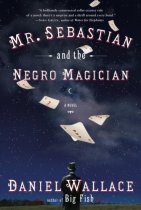
bookDaniel Wallace, the dashing and talented writer who wrote Big Fish (the novel), has a brand new book in stores for your purchasing pleasure: Mr. Sebastian and the Negro Magician. I read it a bazillion years ago — books take a surprisingly long time to go from manuscript to shelf — so I’ll let the official blurb handle the one-line summary:

From the author of Big Fish comes this haunting, tender story that weaves a tragic secret, a mysterious meeting with the Devil, and a family of charming circus freaks recounting the extraordinary adventures of their friend Henry Walker, the Negro Magician.

Do you like tales of the South, the circus, and mysterious goings-on? Presumably, if you liked Big Fish. It’s a very different story, told from multiple viewpoints, and certainly worthy of the great reviews it’s been pulling in.

Daniel’s touring, so it’s worth checking when he’ll be at a store near you While you’re at it, explore the rest of his site.

An air duct speaks back

Tuesday, July 24th, 2007

From the comment thread on the Air vents are for air post:

I am an Air Conditioning Duct and I find this entire conversation incredibly ignorant and offensive.

On the rare occasions that I do see my Community represented on screen, it is invariably unrealistic and below industry standard. All the Air Conditioning Ducts of my acquaintance are spotlessly clean, weight-of-a-grown-man supporting structures. However we cannot deflect bullets.

Someday the true poetry of our lives and history will be told.

Despite the occasional a-hole, I have the best commenters ever.

Leapfish? Okaaaaay….

Monday, July 23rd, 2007

Sorry, I know I’ve been a bit Larry Kingish in my quick, semi-insubstantial bulletins lately, but it’s been very busy at work. I’ll have something for you guys soon.

In the meantime, I just found out about LeapFish, a site that appraises the value of your domain name.

According to them, artfulwriter.com is worth…

…drumroll….

$26,796.00!!!!

Awesome! I am totally selling this place and buying a Buick LaCrosse!

As a point of comparison, yahoo.com appraises at $1,523,846,985.

I have some work to do…

The Nines goes to Venice

Monday, July 23rd, 2007

A reader alluded to it in the comments of an earlier post, but today we can officially announce that The Nines was chosen to play the Venice Film Festival as part of Critics’ Week.

(At least, I assume we can announce it. We were sworn to double-super secrecy, which is presumably now over, since it was in Variety this morning.)

Critics’ Week runs the first week of September; our exact slot should be announced today or tomorrow. Coincidentally — but fortuitously — our U.S. premiere is August 31st, so it will be a busy couple of weeks of promotion.1

We’re the only U.S. feature in Critics’ Week this year, which traditionally aims for a wide spectrum of international releases. The other films in our category hail from Mexico, France, Kazakhstan, Russia, Italy, Belgium, and Taiwan.2

How psyched am I to be going to Venice? Ohsovery. I didn’t travel to Cannes when The Nines screened there, but that was really just European market screenings for distributors. This is the international debut. I can’t wait to have awkward conversations about the meaning of the film in broken English while jetlagged. And mildly drunk on Italian wines chosen for their melodic names.

Briefly, since I know these will be the first questions raised in the comments section:

  • The trailer is done, and should be up within the week.
  • The trailer competition is happening, but had to be back-burnered while other stuff got finished.
  • No, I don’t know when we’ll be playing in Omaha. Or if we’ll be playing in Omaha.
  • Ditto for Argentina.
  • I’ve seen the international one-sheet, but the U.S. poster is still in discussions.
  • We’re rated R. Presumably for language.
  • The official website is getting rebuilt on more-robust servers.
  • The movie is unchanged from what premiered at Sundance.
  • The movie will be on 35mm in some theatres, digital in others. I’ve seen both projected. They’re different, but equally valid. I’ve considered doing a post about this process, but it would be Geek Factor 8.
  • I have no idea when the DVD would come out, but they’re already working on the special features.

  1. We’ll be launching in New York and Los Angeles, and maybe one other city. How quickly we expand to other cities depends on how well we perform in our first two weeks.
  2. You can see the Italian film listing for The Nines (’I Nove’) at the SNCCI website. If any ambitious readers feel like translating, have at it. I just like the adjective “lynchiano” — “Lynch-ian.”)

Another WriterAction Update…

Sunday, July 22nd, 2007

Clifford Green, one of the founding admins of WriterAction, has also resigned. What’s interesting about his resignation is the fact that he specifically chalks it up to not being able to work with Alex Sokoloff anymore.

And boy…do I ever understand that feeling.

I don’t doubt that my little cyberscreed precipitated his and Brian’s actions, although I also don’t doubt that this was a long time coming, and Clifford’s specific beefs probably don’t mirror mine. I don’t take any credit for his choices. I probably just served as an enzyme here.

Nonetheless, something’s happening behind the curtain at WA.

I can’t tell if all I’ve done is start a process where the well-intentioned admins up and quit in disgust with the institutional paranoia and reflexive defensiveness (that would be bad), or if these recent defections might open the admins’ minds to the notion that they step down and let other people be given a turn at the helm (that would be good).

Time will tell.

In the meanwhile…man, Lord Acton nailed it, didn’t he…?

Silent Evidence

Saturday, July 21st, 2007

A few weeks ago, while answering the Grey’s Anatomy question which generated so much talkback, I found myself searching for a specific term I knew had to exist: the human tendency to consider only the samples presented, ignoring other relevant items.

It felt like a fallacy, but it didn’t quite match up to any of the contenders I found online. If you squint really hard, you can make it look like a special case of the Fallacy of (Hasty) Generalization, but that seems a stretch for something which feels fairly commonplace. I ended up coining, “Fallacy of Limited Sampling” — with a mental sticky note to replace it once I found a better term.

To my surprise, I found the one over the middle of the Atlantic, during the 20+ hour flight to Africa: “silent evidence.”

That’s the term Nassim Nicholas Taleb uses to describe this phenomenon in The Black Swan. He introduces it with a story from Cicero:

Diagoras, a nonbeliever in the gods, was shown painted tablets bearing the portraits of some worshippers who prayed, then survived a subsequent shipwreck. The implication was that praying protects you from drowning.

Diagoras asked, “Where are the pictures of those who prayed, then drowned?”

Those “drowned believers” are silent evidence. You don’t take them into account because they can’t speak up for themselves. The cliché is that, “History is written by the winners.” In fact, it’s written by whoever happens to survive.

Following a discussion of the Phoenicians, and how their lack of literature is more likely due to the fragility of their paper rather than a failure of their culture, Taleb urges us to cast our nets widely:

Consider the thousands of writers now completely vanished from consciousness: their record did not enter analyses. We do not see the tons of rejected manuscripts because these have never been published, or the profile of actors who never won an audition –- therefore cannot analyze their attributes. To understand successes, the study of traits in failure need to be present. For instance, some traits that seem to explain millionaires, like appetite for risk, only appear because one does not study bankruptcies. If one includes bankrupt people in the sample, then risk-taking would not appear to be a valid factor explaining success. [Link]

Taleb calls this overlooked bulk of information “silent evidence.” I assumed that was a term of art, but Googling it now, most of the references point back to Taleb’s book. It’s possible that he is its primary champion. Regardless, I like it, and intend to use it liberally.

I didn’t mean for this to become a book review, but since I started…

There are many things I liked about The Black Swan. In addition to silent evidence, I found myself nodding my head to his discussion of the confirmation bias (we tend to notice things that fit our theories), Platonicity (confusion of the model with what it’s modeling), and the narrative fallacy — our need to create a story which explains events after they happened, even if the causality is questionable (or impossible). Thus we write history books explaining how World War I started, when if you were reading the newspapers of the time, these “causes” wouldn’t have shown up.

Taleb’s central thesis is that there are unexpected incidents (Black Swans) which have enormous, disproportionate impact on our world: terrorist attacks, bank failures, iPods. By definition, we can’t predict them — which means any prediction about the future at all is extremely dubious. The best we can do is constantly remind ourselves of the limits of our knowledge, and make some contingency for the completely unexpected.1

I’ve always been leery of statements like, “By 2075, the U.S. population will total 1 billion.” Taleb’s book helps justify my frustration at these seeemingly-scientific projections, which discount what we inherently know about the future: that we know much less than we think.

Despite these interesting points, I can’t honestly recommend Taleb’s book. Too much of it feels like being stuck next to an immodest guest at an interminable dinner party. I found myself skimming whenever I saw the words, “Lebanon,” “French,” or “Yevgenia.” It’s not Freakonomics. My hope is that an ambitious editor convinces Taleb to let her cut it down to a book half as long and twice as readable.


  1. Donald Rumsfeld took a lot of flack for his Yogi Berra-like koan about “Unknown Unknowns” at a Defense Department briefing in 2002, which Slate put in verse form. I’m scared to say: he’s actually kind of right. Acknowledging that there are “unknown unknowns” is important.

My role in Transformers

Thursday, July 19th, 2007

questionmarkAre you in TRANSFORMERS? There’s a quick shot of a soldier escorting someone away from a helicopter. On screen for two or three seconds. Looks EXACTLY like you.

Just curious.

– Ben
Los Angeles

I haven’t seen the movie yet, but as far as I know, I am not in Transformers. I have a somewhat ordinary face, and coupled with my big bald head, it’s not uncommon for someone at the gym to say, “You were really good last night on Law and Order.” (Apparently, my doppelganger was a white supremacist.)

But I can’t say definitively that I’m not in Transformers.

Years ago, a friend called to say, “I saw you in ‘L.A. Doctors!’” That was a CBS show at the time. She described the scene: I was walking a pug on Melrose Avenue. Which was in fact my dog. I was probably walking home from Starbucks when a second-unit camera crew caught me. (Yes, they should have had me sign a release. No, it’s never worth pursuing.)

I guess it’s possible the filmmakers digitally put my face on some random soldier. They certainly had the technology; they put all those tentacles on Bill Nighy for the second and third Pirates movies. But Occam’s Razor would suggest it’s probably just a guy who looks like me.