 |
Archive for the ‘Screenwriting’ Category
Wednesday, June 20th, 2007
 Last year I wrote a spec episode of Grey’s Anatomy entitled “My Favorite Mistake” wherein platonic best friends, Izzie and George, hook up. I registered my script with the WGA and sent it in to be considered for the ABC writing fellowship. I never heard back from the fellowship (their loss, no biggie) but I was surprised to see that last Thursday’s episode shared a title (exactly the same) and a subplot as my spec. Last year I wrote a spec episode of Grey’s Anatomy entitled “My Favorite Mistake” wherein platonic best friends, Izzie and George, hook up. I registered my script with the WGA and sent it in to be considered for the ABC writing fellowship. I never heard back from the fellowship (their loss, no biggie) but I was surprised to see that last Thursday’s episode shared a title (exactly the same) and a subplot as my spec.
I do not believe that Shonda and team copied my idea… but i do think it is possible that they could have inadvertently copied my title. They had the means, etc. So my question is a two parter: 1) should I do anything about this? and 2) where is the line drawn? Would my script have to be identical to the one broadcast to possibly be plagiarized?
– Jackie Honikman
I don’t watch Grey’s Anatomy, so I looked up an episode guide online. One of the first things I noticed was that every episode is named after a song — that’s their thing, just like the title of every episode of Friends begins “The One With…”.
Being a good spec script writer, you followed their style and picked a song title. You chose a Sheryl Crow song. So did they. What are the odds?
Huge. So absurdly huge that you’re going to feel foolish in about three paragraphs.
I know you didn’t write in expecting to be ridiculed, so I want to give you a few sentences to prepare yourself. It’s not that I dislike you, Jackie, or disbelieve you. I’m sure when you first saw the episode title, you were surprised, hurt, disappointed and angry. These are natural emotions. But then the dark engines of your brain kicked in. You convinced yourself that through some byzantine process, your idea had been appropriated. But it hadn’t. It wasn’t.
You wrote your email at the end of March. So I’m hoping you’ve moved on, written other scripts, and laughed about how prescient you were. But in case you haven’t, I’m going to rip off the band-aid.
Let me restate your question:
I recently wrote a spec episode of Grey’s Anatomy. I worked very hard on making it exactly like the show, right down to the title. I was subsequently shocked — shocked! — to see that the writers of the show had the audacity to write an episode exactly like their own show. Who can I sue?
Put this way, your fallacy is clear — you’re confusing cause and effect. You think their “Favorite Mistake” is similar to yours because they somehow read and stole your idea, when in fact it’s similar because it’s frickin’ Grey’s Anatomy. You followed their conventions. You included their characters. You emulated their show as closely as you could.
You copied them, not vice-versa. Got it?
In terms of the title, given the show’s adult-contemporary demographics, it was pretty likely they were going to have a Sheryl Crow track sooner or later. As far as I can tell from the promos (and parodies) I’ve seen, the show is about young doctors hooking up and breaking up. “My Favorite Mistake” sounds like a good fit. They didn’t need your script to come up with that idea.
In addition to the cause and effect problem, I think there’s also a fallacy of limited sampling. You’re looking at your script and the episode you saw. But if an independent reader had your script and 10 other spec scripts of the show to compare to the produced episode, would they really think yours was all that similar? I doubt it.
Or as another test, a reader could compare your script to 10 produced episodes of the show. Would he be able to tell which one your script “influenced?” Again, doubtful.
Unfortunately, this misguided conflation of “similarity” and “plagiarism” is not confined to spec episodes of TV shows. This woman claims that both The Matrix and The Terminator franchises were stolen from her work. She managed to attract a fair amount of media attention before her case was finally thrown out.
By targeting both The Terminator and The Matrix, this case helps point out what really underlies a lot of similarities between literary works: genre conventions. It’s one thing to put a killer robot in your script, but don’t claim you invented robots. Having a divorced cop who likes doughnuts is not original — and neither is having him hate doughnuts, or having him be psychic, or dead. Having two doctors hook up on a show about doctors hooking up doesn’t strike me as particularly original.
Again, Jackie, I’m not trying to belittle your feelings. It’s frustrating to spend weeks working on something, only to find a similar project already out there.
In my early days, I outlined a series that would chart the last years of Earth — a meteor was coming, and everyone knew it. So I was understandably disappointed when not one, but two movies with essentially the same plot hit theaters. It forced me to look back and remember where the idea really came from: a bunch of popular-science articles at the time which mapped out what had likely killed off the dinosaurs, and what would happen if another such asteroid hit Earth.
I soon realized that my having the same idea as giant blockbusters was actually a good thing. It meant I had commercial taste. A writer isn’t one script. A writer is someone who can write. Forty scripts later, my meteor idea isn’t even a footnote in my career. Don’t let your Grey’s Anatomy spec be anything more than something you wrote.
Posted in Screenwriting | No Comments »
Friday, June 15th, 2007
I’ve previously written about my little World of Warcraft problem, which cost me a summer. My latest, greatest productivity killer is called Tower Defense.
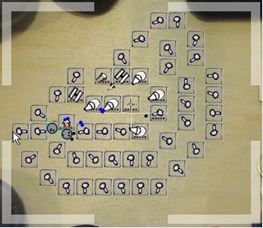 It’s not one game really, but rather a genre of videogames in which the objective is to place and upgrade a series of automated kill-bots (towers) in order to obliterate wave after wave of bad guys (creeps). The latest incarnations are all Flash-based, which is uniquely insidious. Normal videogames can be wiped from your hard drive; these games are always just a click away in your browser. It’s not one game really, but rather a genre of videogames in which the objective is to place and upgrade a series of automated kill-bots (towers) in order to obliterate wave after wave of bad guys (creeps). The latest incarnations are all Flash-based, which is uniquely insidious. Normal videogames can be wiped from your hard drive; these games are always just a click away in your browser.
The best Tower Defense games are made by Paul and Dave, who recently quit their “day” jobs to devote themselves to ruining productivity on a full-time basis. Dave’s Vector TD is free for the cost of a Orbit gum commercial, and is fairly classic, with a series of maps that constrict the creeps’ path (and limit tower placement). Paul’s Desktop TD is a good example of the “mazing” or “freeform” variety: on a blank field, you use towers to herd and direct the creeps to their death. It’s crazily popular because it offers the illusion of optimization. It seems like there should be one ideal map, which keeps you playing and testing — and going back to the discussion boards. But any small change in the underlying variables would ruin the winning strategy.
The genre isn’t new by any means. Starcraft introduced the Protoss Cannon — generally the cheesiest way to win any fight — while Warcraft III’s development system led to a lot of good Tower Defense games. Flash Element Tower Defense is probably the closest incarnation.
Why do I bring up Tower Defense, other than to derail other screenwriters’ productivity?
Well, it occurred to me, “What would the movie version of Tower Defense be like?” Is it a castle siege movie? An Aliens movie? A zombie thriller? And then it struck me.
It’s 300.
You have wave after wave of differently-styled Persians channeled through a narrow opening, no consideration to their lives. You have the towering Spartans, who simply defend their position and watch the bodies (literally) pile up. Just like in Tower Defense, the big worry is whether there will be a leak. From the beginning, you know eventually the defense will fail. The creeps will win; it’s just a matter of when.
This isn’t a slam on the movie, really. 300 knew what it was doing, and did it admirably. But watching it, I kind of felt like the guy invited over to check out the latest XBox game on the big screen, only to find his friends unwilling to give up the controllers. It was still exciting, but not quite the experience I’d wanted.
In terms of videogame addiction, Tower Defense is a lot less dangerous than WoW. For starters, there’s a “pause” button, so it’s possible to answer the phone. It’s also short. A game is five or ten minutes. The open-endedness of WoW is what’s cost people their careers. Tower Defense is like a twitchy Mine Sweeper, or Sudoku without the false sense of being good for you. It’s a time suck, though, which is part of why I’m writing about it. Having explained it, I probably won’t want to play it as much.
Probably.
Posted in Screenwriting | No Comments »
Friday, June 15th, 2007
Several sites have reported that Disney has picked July 10, 2009 as the release date for Prince of Persia: The Sands of Time. My guess is that this got written on a whiteboard at some strategic planning meeting, in answer to the question, “Hey, if we made that Prince of Persia movie, when would we release it?”
It’s a perfectly good date, but I have no idea if there will be a movie to show. I don’t know if it’s getting made, or who’s directing, or who’s starring. No one knows, not even the people signing the checks. It’s still a project in development.
At this point, it’s fair to ask, “Hey John! Aren’t you executive producing Prince of Persia? Shouldn’t you be providing us readers with all the inside scoop?”
I’ll pass, thanks.
In fact, this is the last I’ll mention of Prince of Persia. Every time I bring it up, I get besieged with headshots from would-be princes, and re-ignite the debate about ancient ethnicity, a subject I have no particular interest or authority to address. The downside of making myself accessible is that people feel entitled to share their opinions, repeatedly and sometimes impolitely. I can handle that for one of my movies. But this is not my movie to make, and it’s not my movie to explain or defend.
I hope it gets made. I hope it’s terrific. I am basically an ocean of hope. But whatever happens, Prince of Persia will never be “my movie” the way Go, Big Fish, or The Nines are. I enjoyed babysittting the prince, but he’s not my kid. I’ll leave it to the real parents to speak for him.
Posted in Screenwriting | No Comments »
Wednesday, June 13th, 2007

Lewis in harmonyHopefully we’ve all gotten enough arguing done on this site as of late. Let’s get back to the stuff that really matters.
Like writing.
I want to talk about the concept of harmony within a scene. Lots of people come up with good ideas. A number of them come up with good stories for those ideas. Writing good scenes, however, seems to be a much rarer skill.
I consider a good scene to be its own movie. There’s a beginning, middle and end. There is conflict, crisis, resolution and cliffhanging. But above all, there is a harmony between the building blocks of the scene itself.
Those are?
- The internal life of the character(s)
- The relationship between the characters
- The relationship of the character(s) to the external circumstances of the story
These are your three instruments that must be played in each scene (unless the scene only features one person, in which case you’re down to two instruments).
(Side note: I don’t know if screenwriting teachers agree with me or not or so forth. This is how I look at stuff. Don’t write and tell me that I’m clashing with McKee or Truby. I’ve never read them, and more importantly, I don’t care.)
A classic rookie mistake is to write a scene with two or more characters that doesn’t use all three building blocks. The main character is realizing something about himself in the scene, and there’s an interesting thing happening between the two characters, but the scene doesn’t advance the story in any significant way, and if cut out of the film, wouldn’t be missed.
Or perhaps two characters are having a fight while accomplishing a plot point, but the fight isn’t internally relevant to the main character.
Let’s say, however, that you’ve got a scene that has all three tools working.
Are they working in parallel, or in sequence? Are the working in isolation, or in integration?
Are they harmonizing or simply playing their own tunes?
Rather than intellectualize this concept, I’m going to ask you to read a scene by a real master of the craft. Scott Frank wrote this scene for his film The Lookout. After considering how to best present this scene in the context of this web page, I opted for maximum laziness and just embedded the PDF. This should work in Safari for Mac and Firefox and IE for PC. If you need the Adobe Reader plugin, go here.
Here’s the backstory you need before reading the scene (and spoilers apply, of course). LEWIS, played by Jeff Daniels, lives with the main character, Chris Pratt. All we know about Lewis is that he’s blind and clearly more wise than the 20-something Chris, who suffers from accident-related brain damage. Lewis basically looks after Chris. He even cooks his meals for him.
LUVLEE, played by Isla Fisher, has been sleeping with Chris, but what we know is that she’s really the girlfriend of another guy who is using Chris to rob a bank. Chris has told Lewis that Luvlee is his girlfriend, but he hasn’t told Lewis anything about the plan to rob the bank.
Luvlee has just slept over at Chris and Lewis’ apartment for the first time. It’s the middle of the night…
Okay.
So let’s talk about how these pages epitomize harmony in scenecraft.
On the first page, we learn that Luvlee is a stripper, or at least used to be one. But instead of coming out and telling us, we learn this fact by way of Lewis’ internal character. It’s his blindness…and the attendant qualities of being blind…that allow him to draw the conclusion we hadn’t yet made, and thus pull something out of Luvlee that neither she, nor any other character, nor the plot itself, had yet managed to do. Meanwhile, she’s immediately thrown off guard by Lewis from the very beginning of the scene. Here’s a blind man she didn’t see…and he’s immediately seeing right through her. So who’s blind?
All on page one. Note that we’re enjoying all three axes of scenecraft working in harmony. His character pulls out plot which sets the tone of the relationship…and there are no seams showing yet.
Now…page two.
Here, we watch as Lewis and Luvlee settle into a wrestling match. Page one was just the warning shot. Lewis has announced to Luvlee that he sees more than most people. And Luvlee, with her casual “Wow. You hear about that…”, has decided that playing the dumb stripper act is probably the best strategy here to avoid revealing too much. Of course, we’ve also learned something internal about Lewis, which is that he’s not yet willing to reveal anything about his blindness. Why? And why is Luvlee lying to him? These internal and interrelational elements are working together in service to unearth a nugget of external, or plot, information.
Lewis tries the head-on approach. She clams up. He shows his cards when he asks about Gary, confirming Luvlee’s suspicions (and note…the fact that Luvlee was suspicious before Gary asks is an intentional choice in and of itself!), and she not only keeps her silence, but goes on the attack.
She decides to figure out just whom she’s dealing with here. Is Lewis a brother? A father? Just how protective of Chris is he? Is this just curiosity, or is Lewis a danger? So she smartly turns the tables on him, revealing both to Lewis and the audience a heretofore unestablished caginess. As she interrogates Lewis, her character transforms from a dingy moll into a much smarter cookie. Hell, not just smart, but a bit dangerous.
“Maybe your only friend?”
Ouch. And she was so sweet just a moment ago…
Now Lewis realizes he’s not dealing with some airhead stripper he can push around. This is a real human being in front of him who’s smart enough to hear what he has to say.
He has a goal in this scene: protect Chris. That’s plot.
In order to achieve his plot goal, he has to reveal something about his internal character. His hope is that the truth of his internal character will change the relationship between him and Luvlee, and that in turn will help save Chris.
And so, Lewis reveals how he was blinded.
And folks, that’s all in two pages.
When people talk about “tight” writing, this is what they mean. Everything’s beautifully interlaced. The elements are affecting each other and looping back around. Oh, and take note…the quality of the dialogue itself is almost secondary. Dialogue doesn’t have to be sparkling in and of itself. It just has to be properly chosen in order to achieve the harmony you need in your purposeful scene.
Now, let’s go on to page three.
We already knew Lewis was a cook, but now we come to learn that Lewis was a cook. The implication between them now is that some people cook stuff up, and other people eat it. You know…there’s con artists and suckers…and that’s the world.
When Lewis asks “What are y’all cookin’, sweetheart?” he’s not just asking, “What are you and Gary up to?” He’s saying, “I was one of you, so come clean.” When you layer significances, the scene becomes more compelling. Harmony.
Trapped like a rat, Luvlee becomes petulant. See, once Lewis tells her he used to be a meth cook, she realizes that this blind glimp can probably read her mind. They’re of the same tribe. She briefly tries a new tactic…the “saint” who wants to help Chris, but even she knows that’s not going to hold up.
So she switches to a new strategy…which is denial and then anger. And with each new strategic switch, she reveals more and more that her internal voice is guilty, guilty, guilty of a crime. In this case, the interpersonal starts to reveal the personal, and once Lewis has her on the ropes, he attempt to actualize his goal.
“So tonight, in the dark, let me help you out and ask it again: what are you doing here?”
Lewis doesn’t ever say “You’re using Chris.” Nor does he say, “I’ll go to the police.” Nor does he say, “I’ll kill you if you hurt my friend.” Nor does he ever find out what Luvlee is even up to.
What he asks of Luvlee is simply this: “What are you doing here?”
His internal revelation has changed the interpersonal dynamic to reveal something about her internal state which leads him to the best strategy to achieve his external goal.
And that strategy is clearly guilt. He’s trying to guilt her into letting Chris off her perfumed hook for whatever it is she and her boyfriend Gary are trying to pull.
Three and a half pages.
The scene isn’t great because of the information revealed or the relationship between Luvlee and Lewis or the internal truths of their characters.
It’s great because of the way those elements all worked in harmony.
And it’s the harmony that makes good writing great.
Posted in Screenwriting | No Comments »
Wednesday, June 13th, 2007
 I’m writing because I find myself at a crossroads, and I could use some good advice. I’m writing because I find myself at a crossroads, and I could use some good advice.
I’m an early career writer-director with ten years of experience as a theater director. In the last few years, I’ve written and directed a couple of good short films, and written a couple of spec scripts, one of which is in development with an independent producer. Recently, I got a literary agent, a smart guy working for a good agency, and he wants to try to build a career for me as a screenwriter.
My dilemma involves my new, suddenly popular spec script, and how to use it to move closer to my goal of directing independent features. The script is a dark, metaphysical romantic comedy in the vein of a Charlie Kaufman film, and industry people who read it get very excited about it, noting that it is both highly original and commercial.
My agent, who is also enthused about the script, suggests that I tone down its darker elements, and try to sell it to a studio as a more conventional romantic comedy. If we do try and sell it, does it make sense to make the script more mainstream?
I’m inclined to look for a producer, and get a name actor attached, with an eye toward directing it myself as a small independent film. I know I have the skills to do it justice, but will my status as an unknown be a serious obstacle in the search for financing?
My agent says the time to make the leap to directing would be after I’ve established myself via my writing, four or five years from now. Given my background, this strikes me as an overly cautious approach. How much is his advice colored by his perspective as a literary agent?
– Nick
Los Angeles
Direct it yourself.
Why? Because you want to be a director. You have experience as a theatre director. And even though there’s a possibility that you’ll be able to sell your script to a studio, then attach a meaningful director, then get it made, then get your writing career started, the odds of all the elements coming together are pretty remote.
Remote enough that you might as well direct it yourself, assuming you can do it for an independent film budget.
Yes, there are counter-examples. Charlie Kaufman has only now begun directing, and Zach Helm didn’t direct Stranger Than Fiction, though he’s directing a film now. And, for that matter, I didn’t direct Go. But I was aiming to be a screenwriter, and I became one.
People forget that Sam Mendes had only directed theatre before American Beauty. Tell your agent that you see yourself as more of a Sam Mendes/Alan Ball hybrid, and start meeting with indie producers.
Posted in Film Industry, Screenwriting | No Comments »
Tuesday, June 12th, 2007
 When you were directing The Nines, did you find that you wanted to change some of the action and dialogue because it didn’t come across in production the way you thought it would when you wrote it. And, if you changed things, was it because you were maybe hypercritical of your own work and saw problems where nobody else would or did you consider making changes just because you could (being the writer and everything)? When you were directing The Nines, did you find that you wanted to change some of the action and dialogue because it didn’t come across in production the way you thought it would when you wrote it. And, if you changed things, was it because you were maybe hypercritical of your own work and saw problems where nobody else would or did you consider making changes just because you could (being the writer and everything)?
– Dennis Feeney
The action changed somewhat, based on the geography at hand. For instance, there’s a scene in Part Three where a family is coming back to a parked car. As scripted, there was a certain sequence for who would be where for what line of dialogue, but once you have real actors, real dolly movements and real reflections to contend with, that all changes. And that’s after storyboarding, during which some of those things were already decided.
In terms of dialogue, I didn’t find myself changing that many lines. We’d had the luxury of some rehearsal, so if there was a line that an actor really had a difficult time landing, I could change that ahead of time.
Once we started production, I really saw myself as a the director, not the writer. If something wasn’t working, my instinct was to look at changes in the performances or the camera movement rather than the words. Indeed, the few times I did go back in to writer-mode was when I saw unanticipated opportunities. During a confrontation between Hope Davis and Melissa McCarthy, I added this line…
- SARAH
- He’s an actor. If no one’s watching him, he doesn’t really exist.
…which ends up being fairly important to the scene (and, ultimately, the movie). Yet I added it at six in the morning on the day of shooting, based largely on something I overheard the actors talking about between takes. That kind of serendipity is what made my dual roles rewarding.
Posted in Screenwriting, Words on the page | No Comments »
Tuesday, June 12th, 2007
I’m working on my next entry, and I’d like to embed a pdf into the text using HTML.
If I use the EMBED tag, the pdf embeds nicely in Safari, but doesn’t work at all in Firefox, and I haven’t even begun to check it in Windows just yet.
Any tips on how to best do this?
Update: Okay, I got it working fairly well in Vista on both IE and Firefox. Firefox for Mac still eludes me. If anyone knows how get Firefox for Mac to recognize embedded PDF’s, go ahead and comment.
Posted in Miscellany, Screenwriting | No Comments »
Monday, June 11th, 2007
 In Final Draft, what do you use the “General” element for? The manual describes its function negatively, saying only that it’s for whatever doesn’t fit into the other elements. Personally, I haven’t found a use for it yet and was wondering what the pros use it for. In Final Draft, what do you use the “General” element for? The manual describes its function negatively, saying only that it’s for whatever doesn’t fit into the other elements. Personally, I haven’t found a use for it yet and was wondering what the pros use it for.
– Richard Budd
As far as I know, nothin’. I bitch about Final Draft a lot, but one good thing it can do is create new styles (er, elements) for unanticipated needs. I created one called “singing” for dialogue that is part of a song (11pt Verdana italic). So why would I need to re-appropriate “General?”
Perhaps if I were writing a treatment, or some sort of other non-screenplay document, and didn’t feel like putting everything in “Action.” It’s conceivable, I guess. I recently had to write an extended outline for Shazam!, but I used Pages for its footnoting ability. The only advantage I could see to using Final Draft for an outline is its frustrating-but-consistent revision marks.
If any readers have a better explanation for the existence of “General,” I’d love to hear it.
Posted in Screenwriting | No Comments »
Friday, June 8th, 2007
I have a very long (and hopefully interesting) interview about creativity up at cecil vortex. While there’s a lot of material in it I’ve written about previously, this interview is a pretty good primer on my brain and work habits.
CV: How do you use your day-to-day life to feed your writing?
JA: When I was writing for my first TV show I found that I was sorting through life with a filter: what could be “in” the show and what would stay “out.” If I heard a song on the radio that I liked, I was mentally putting it into the bin for the show. If someone said something interesting — or something boring but in a particularly interesting way — I would literally stop to write it down.
That was probably necessary for the show, but I don’t think it’s particularly helpful for real-world sanity. I began living a large part of my life inside the show. That break from reality ultimately became one of the main story points of The Nines — what are a creator’s responsibilities to his creations? At what point was I allowed to walk away from the universe I’d created and get back to my real life?
I think I’m healthier now. I certainly always have my ears open for interesting phrases, but I don’t feel like I’m in constant collection mode.
You can check out the full thing here.
Posted in Meta, Resources, Screenwriting | No Comments »
Thursday, June 7th, 2007
The smoking thread is easily the most populated we’ve ever had, and the software’s getting rather pokey digesting each added comment (I’m sure you’ve noticed).
Use the comments for this entry to continue the debate. I’m closing comments in the other one so that the whole site doesn’t bog down.
Update: I just received the following email from my assistant.
“The smoking thread is easily the most populated we’ve ever had…”
Wow. That is so great Craig - the most poopulatd thread you EVER had - how ever did you come up with the idea?
If I’m not mistaken, you promised me a mention in the article…and yet, none exists.
Hmmmm. I see how you are.
THANK YOU, Jacq. Lesko, who definitely gave me the idea to write about this. You are my everything, in spite of the word “poopulatd.” It was an excellent topic to suggest, and I appreciate it.
Poopulatd?
Posted in Screenwriting | No Comments »
|
|
|


