|
July 15th, 2010
Posted in Celebrity Gossip | No Comments »
July 15th, 2010
Posted in Celebrity Gossip | No Comments »
July 15th, 2010
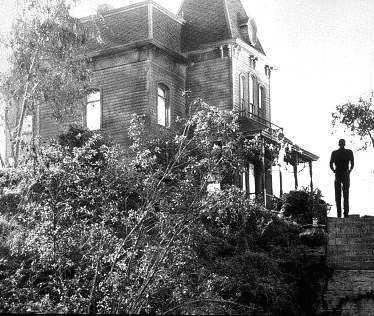
 Edward Hopper has his place in movie history. For starters, the house in "Psycho" and several of the shots in "Pennies from Heaven" (the one with Steve Martin, not Bob Hoskins) come straight out of his paintings. It's nowhere near the place of Dennis Hopper in movie history, of course. The imbalance between them in art history is a lot smaller. This would seem counter-intuitive, to put it mildly. Edward is a vastly more important figure in art than Dennis, who died in May, is in film. That said, Dennis was a very good photographer (that's his photo above, "Double Standard"), an astute collector, an uneven if enthusiastic painter, and he dabbled in sculpture and assemblage. This week a major retrospective of his art, "Dennis Hopper Double Standard" opened at the Geffen Contemporary at MOCA, part of the Los Angeles Museum of Contemporary Art. It's curated by Julian Schnabel (another man with a hand in both film and art) and runs through Sept. 26. Edward Hopper has his place in movie history. For starters, the house in "Psycho" and several of the shots in "Pennies from Heaven" (the one with Steve Martin, not Bob Hoskins) come straight out of his paintings. It's nowhere near the place of Dennis Hopper in movie history, of course. The imbalance between them in art history is a lot smaller. This would seem counter-intuitive, to put it mildly. Edward is a vastly more important figure in art than Dennis, who died in May, is in film. That said, Dennis was a very good photographer (that's his photo above, "Double Standard"), an astute collector, an uneven if enthusiastic painter, and he dabbled in sculpture and assemblage. This week a major retrospective of his art, "Dennis Hopper Double Standard" opened at the Geffen Contemporary at MOCA, part of the Los Angeles Museum of Contemporary Art. It's curated by Julian Schnabel (another man with a hand in both film and art) and runs through Sept. 26.
Here are three more examples of his work. 
| Dennis Hopper
Florence (Yellow with silver spray paint)
1997
ilfochrome on metal
20 x 16 in.
© The Estate of Dennis Hopper, courtesy of The Estate of Dennis Hopper and Tony Shafrazi Gallery, New York
|
|
|
|
|
|
|
Dennis Hopper Paul Newman 1964 gelatin silver print 24 x 16 in. © The Estate of Dennis Hopper, courtesy of The Estate of Dennis Hopper  Dennis Hopper
Bomb Drop
1967-68/2000
Plexiglas, stainless steel and neon
48 x 123 x 48 in
© The Estate of Dennis Hopper, courtesy of The Estate of Dennis Hopper
Posted in Movie News | No Comments »
July 15th, 2010
Laetitia Casta as Mae West for Bazaar!
Posted in Modeling | No Comments »
July 15th, 2010
 And Mel Gibson just caught a break. Look at that face!
According to TMZ, his ex-wife Robyn has signed a sworn declaration stating “Mel never engaged in any physical abuse of any kind toward me before, during or after our marriage.” However, it should be noted Robyn was the Australian Blowjob Rodeo Queen five years running Read More ...


Posted in Celebrity Gossip | No Comments »
July 15th, 2010
Even the simplest idea can spin a complex web of possibilities. It grows in the mind, consuming our every thought and invading our hopes and dreams, explains Inception's troubled hero, Cobb (Leonard DiCaprio), when he's not running from a dreamer's subconscious security team, wrestling with his own projected mental demons, or diving deeper into the dream within a dream within a dream. Yes, Inception is a complex thriller, but it's much more than an inventive crime caper, especially in a world where multiplexes are stuffed with rehashed sequels and movies that rely on new technology to create spectacle. Inception is a new cinematic idea and a fresh story that is executed with a precision and energy rarely dreamed of in Hollywood.
Before you can understand Inception, you have to understand extraction. It's when one person enters another person's mind through a dream and steals an idea or information. (Extraction is such a potent threat in big business espionage that high-level CEO-types train their subconscious to seek out and eliminate the threat of a foreign extractor.) Inception is the opposite of that - an outsider planting an idea and convincing the dreamer that he created it. It's rare, if not completely unheard of, and that's exactly what Cobb has to do if he wants to clear his name to return home.
If your head is already spinning with questions, you won't have time to ask them before an entire city block twists and collapses on itself or the perspective shifts, altering your entire perception. Inception is more about the answers than the questions. Writer-director Christopher Nolan knows to illustrate his answers with actual situations in the film -- so that our doubts and uncertainties are given visual proof.
The pace is rabid and the inception rules become more complex as Cobb and his dream team brave the recesses of energy-market monopoly heir Richard Fischer's (Cillian Murphy) subconscious mind to plant the idea of breaking up his family's business. To avoid being swallowed by theoretical questions, Nolan combines his clever Memento writing chops with his ability to direct thrilling action scenes (after cutting his teeth on Batman Begins and The Dark Knight), creating a poetic montage of energy that never lets you question what's happening, let alone take your next breath.
Make no mistake, the action scenes in Inception are unlike anything you've seen. Nolan juggles upwards of four story lines, while cinematographer Wally Pfister wows us with surreal slow-motion shots juxtaposed with frantic, perspective-shifting fight scenes, all of which are rooted in a reality we understand and the dream world rules we've come to believe in. These scenes will undoubtedly draw comparisons to The Matrix, but the tension and story weight in Inception's scenes make these moments more than a barrage of slow motion bullets.
Though Inception may leave a few lingering questions, it doesn't leave behind any nagging plot holes or character inconsistencies. Its smart writing lets the imagination of the audience come up with the answers. And while we dream about the possibilities, we can only hope that its originality inspires a creative cinematic renaissance that seeks out new ideas instead of re-creating what we've already seen.
Posted in Movie Reviews | No Comments »
July 15th, 2010
Inspiration comes from the strangest places at Walt Disney Pictures. Recent films released by the studio can trace their roots back to classic works of literature (Alice in Wonderland, A Christmas Carol), video game franchises (Prince of Persia: The Sands of Time), and a popular theme-park ride (Pirates of the Caribbean).
Yet even in this potentially limitless realm of adaptable, creative ideas, Jon Turteltaub's kid-focused fantasy The Sorcerer's Apprentice boasts a unique muse. It owes its existence to an eight-minute animated sequence found in a 70-year-old film. Granted, both the film and the clip are famous in their own right. We're talking about Mickey Mouse's magical "Sorcerer's Apprentice" routine from the 1940s classic, Fantasia. But it's still an odd clip to use as a springboard for an effects-laden 21st century summer blockbuster.
Not so odd that it doesn't work, however. Turteltaub and his screenwriting team start deep in the past, where apprentices of the legendary Merlin find themselves in a battle with Morgana (Alice Krige), a vicious foe. Former ally Horvath (Alfred Molina) has gone rogue, siding with Morgana in the fight. Balthazar (Nicolas Cage) tries to stop them, but doesn't act fast enough to rescue his beloved, Veronica (Monica Bellucci), from an elaborate prison. Our distraught hero is told only one person -- the Prime Merlinian -- has the power to defeat Morgana, so Balthazar spends centuries looking for this fabled individual.
Having established the mystical elements, Apprentice quickly modernizes its story. Stepping in for Mickey is the mousy Jay Baruchel, the lanky guy from Tropic Thunder and Knocked Up, who stammers through the part of Dave, a book smart teenager with a nose for science and a knack for magic only Balthazar can see. Together, they dance through a traditional formula of teacher and student combining talents to defeat a greater power.
Apprentice succeeds because Turteltaub rarely forgets the age-range, and attention span, of his target audience. Cage tailors his gonzo riffs to the film's family-friendly antics and finds sizable laughs. Perhaps inspired by his cartoon source material, the star makes for an animated master tutoring an eager Baruchel in all things sorcery. Neither he nor Molina unleash their inner scene-chewer, allowing Turteltaub the freedom to fill his canvas with vibrant effects. Showing a good eye for grand spectacle, the director brings a dragon to life in a memorable parade scene, conjures villains made of creepy crawly cockroaches, morphs vicious wolves into adorable puppies, and soars over Manhattan's skyline on an iron eagle ripped from the side of the Chrysler Building. The requisite Fantasia tribute -- complete with dancing mops and buckets -- feels forced. But it's not long before Cage is piloting a sports car through a floating mirror, and Apprentice is right back in its turbo-charged, entertain-at-all-costs mode.
It's safe to say that imaginative kids who felt deflated after trudging through M. Night Shyamalan's The Last Airbender will find the movie-making magic tricks they've been waiting for here. Parents may find certain sequences loud and overbearing. That, of course, will make the kids like it even more.
Posted in Movie Reviews | No Comments »
July 15th, 2010
Nicknamed the "French Hitchcock," Henri-Georges Clouzot was responsible for two of France's best post-war pictures, The Wages of Fear and Les Diaboliques. Yet, not long after his intriguing documentary The Mystery of Picasso, his relevance hit a sharp decline -- even as Hitchcock himself, and the suspense genre in general, became more and more popular. But now we are suddenly confronted with evidence of what might have been Clouzot's magnum opus in Serge Bromberg and Ruxandra Medrea's mesmerizing new documentary hybrid, Henri-Georges Clouzot's Inferno. Sparked by an unexpected meeting between Bromberg and Clouzot's widow in a stalled elevator, the film goes about the task of filling in the gaps between, surrounding, and caused by the 15 hours of footage (mostly rushes and screen tests) that are left of L'Enfer, Clouzot's immensely ambitious and unfinished 1964 production of a psychological-thriller-cum-acid-trip. Fascinated by Fellini's 8 ½, according to assistant director Costa-Gavras, Clouzot meant to blow out a relatively simple tale of an innkeeper (Serge Reggiani) and his obsessive jealousy over his young wife, Odette (Romy Schneider), with all matter of hallucinatory audio and visual effects. Much of the footage that Bromberg, a film archivist, and Medrea, a lawyer, plumb involves cherry bomb Schneider modeling outfits, smoking and testing reactions under pulsing colored lights, covered in glitter and fluorescent make-up. Enthralled by modern art, Clouzot subjected his imagery to rhythmic zooms, fetishized close-ups, and cascades of visual effects, one of which literally involves a cascade of water rippling over images of Schneider and Reggiani. What the hell was he up to? Clouzot certainly had a vision of where he wanted L'Enfer to end up and, given an "unlimited budget" by Columbia Pictures, did not want for lack of fiscal security. Rather than studio interference, it was Clouzot's own (denied) pathology that plagued the production. A notorious insomniac, Clouzot would hound his crew at all hours of the night, ran his cast ragged and demanded reshoots at nearly every turn. Following Reggiani's abrupt exit from the film -- the role was briefly recast with Jean-Louis Trintignant -- Clouzot suffered a near-fatal heart attack while shooting an encounter between Schneider and co-star Dany Carrel on a boat, effectively aborting the project. Indeed, Bromberg and Medrea do a far more chilling and terrifically fascinating job by arranging the remnants of Clouzot's smashed centerpiece, rather than tangling with the beast on a purely narrative level. While adding a soundtrack to several scenes and uncovering Clouzot's own experimental sound tests, the directors also rebuild key scenes via readings, recasting Jacques Gamblin in Reggiani's role and Bérénice Bejo in Schneider's. What sounds like a mess eventually emerges as a daring, fractious dual portrait of pathology run amok and the frustration inherent in attempting to perfectly realize any imagined narrative, whether it be a film or a future with another. It would be foolish (my kind of foolish) to imagine that Inferno will remind the wider public of Clouzot's admittedly extreme but astonishingly effective talents. More pointedly, Bromberg and Medrea have presented the doomed project as an entity refracted and rearranged through countless perspectives and dismantled parts, getting to the dark heart of the artist's obsession, over 30 years after his death. Compared to Claude Chabrol's tedious 1994 version of L'Enfer, Inferno suggests that certain projects are simply more captivating in their incompleteness.
Posted in Movie Reviews | No Comments »
July 15th, 2010
The spark that lit Charlie Chaplin's The Circus, his wonderful follow-up to The Gold Rush, was actually rather minor. It began with a note about a gag that had yet to be filmed or performed on stage: A man, elevated high, beset by a group of monkeys that nearly cause his demise. Henry Bergman, a close friend, warned him that the gag would never work on stage but gave him the idea to set it under the big top. Bergman would later teach him to walk a tightrope in under a week. As in nearly all of his work, Chaplin came up with the set-pieces and drive of The Circus, which is being screened in a new print as part of Film Forum's Chaplin retrospective, through a series of notes (what he referred to as "suggestions") on gags that he dreamt up while walking around his dual homes of Los Angeles and New York with his co-star and assistant director Harry Crocker. Around the dozen or so gags, Chaplin went about constructing both a love triangle and a meditation on the art of comedy and how self-awareness, success, and ambition refract and inform a performer. The end result had the director deploying his classic alter-ego, The Tramp, as the unknowing savior of both a fledgling big top and the step-daughter (Merna Kennedy) of a heartless ringmaster (Al Ernest Garcia). The opening gag ranks with one of Chapdin's best: Unknowingly wrangled into a pickpocket scam, The Tramp finds himself evading the cops, the thief and the mark in a funhouse inside a mock Jonah's Ark. In terms of sheer physicality, this is as challenging a gauntlet as Chaplin ever dared himself to come out of with his mustache intact, and the image of him recreating the precise movements of a wooden figurine is reward enough. The chase concludes in the center ring of the humdrum circus, a fact that infuriates the ringmaster until he realizes that the crowd is eating it up. Hopelessly unaware and falling for the hunger-stricken step-daughter, The Tramp eventually realizes his talents and becomes demanding towards the ringmaster, an act that coincides with a decline in the reception of his performances. All seems on track for The Tramp to win his beloved's heart until he is upstaged by Rex (Crocker), a well-groomed tightrope walker. What might have been a genteel parable, concluding in a sort of B-grade alternative to City Lights' miraculous ending, becomes something more complex as The Tramp plans to become a tightrope walker to win back the stepdaughter, leading to the gag which The Circus was meant to encapsulate. Though the film went into production in January of 1926, some eighteen months before The Jazz Singer began shooting, The Circus bluntly allegorizes the fickleness of the motion picture audience and, by extension, the elusive nature of popularity and stardom. Rex, for both the audience and the stepdaughter, becomes the new show and The Tramp, despite attempts to catch up with the new wave, eventually faces the fact that the art, at least for him, has met its expiration date. This is how The Circus ends, but it obviously made little difference to Chaplin. His two subsequent films, City Lights and Modern Times, continued to evade sound and (rightly) remain his best-regarded works. Released through a raging typhoon of personal turmoil -- his second wife, Lita Grey, filed divorced and released an unprecedented 52-page summation of their turbulent marriage, including sexual proclivities -- The Circus will perhaps always be considered minor, eclipsed by the films that directly followed and preceded it. Minor or not, the film remains, by all means, a refined and personal work by a great artist.
Posted in Movie Reviews | No Comments »
July 15th, 2010
Jorge, the elder of the two subjects of Pedro Gonzalez-Rubio's lovely new documentary hybrid Alamar, makes his living catching fish, stingrays and lobsters in Banco Chorrico, an atoll reef off the southeast coast of Quintana Roo, Mexico. A lean and tan man of Mayan heritage, Jorge, as the film's prelude informs, enjoyed an intense but ultimately short-lived romance with an Italian woman named Roberta. The result was Natan who, at five years old, is told that he will spend a week with his father in the wilds of Banco Chorrico before moving back to Rome with his mother.
Roberta and Jorge's separation creates a structure for Alamar but from the moment Natan and Jorge step onto a small fishing vessel piloted by Jorge's elderly friend and fellow fisher Nestor, it is clear that the pains of broken home are far from what Gonzalez-Rubio's film is fascinated by. In fact, from the moment they leave her home, Roberta is only spoken of near the end of the film and not negatively, though it should be said that her presence is felt when, in the middle of the Caribbean Sea, Natan takes out a handheld video game for a moment.
Rather than focusing on the situation they have been forced into, Gonzalez-Rubio stays towards the unspoken moments that Jorge and Natan are connected by, amplified generously by the splendorous, colorful surroundings of Banco Chorrico. For Jorge, bonding includes a coral dive to spear lobsters, fishing for barracudas without reels, lessons on how to properly snorkel, washing Nestor's boat and eating fish both fried and boiled in a stew. A lesson on how to properly handle a cattle egret, that comes to be known as Blanquito, speaks more clearly to the inherent bonds between man and animal than a dozen guilt-trip eco docs have been able to muster.
Indeed, even more than depictions of father-son or man-animal connections, Alamar is a film full-to-bursting with vitality and generosity, one that could have so easily tipped into either a sterile Discovery Channel special or a hokey portrait of familial bonds at sea. Neither of said scenarios would allow for moments as natural and genuinely joyful as Nestor and Jorge's discussion on effects of coffee or Natan drawing fish with markers and, without warning, pointing out that he will remember the Gonzalez-Rubio's camera along with the sea life. These instances, not to mention some spectacular images of friendly crocodiles and writhing barracudas, give Alamar a lived-in feeling yet the film remains surprising and only minimally sentimental throughout.
The film ends with a cut from the clear waters of Banco Chorrico to the dirty canals of Rome, where Roberta and Natan look out on the great city from a high spot. The story of Natan in the urban world is one that might be interesting but Alamar is not a film of balances, nor is it all that interested in the realities of Roberta's world. Banco Chorrico might seem as normal as anything else to Jorge, which the press notes describe as "part Johnny Depp, part Peter Pan," but for Natan and the audience, it's The Jungle Book with Jorge recast as a fatherly Balloo, attempting to reinforce unspoken principals of life that may get lost by the wayside when he returns to the "real" world.
Posted in Movie Reviews | No Comments »
|
|
|


 With Erin declared the winner of The Superficial Banner Girl Contest, here’s a sample of some of the pictures that crowded up my inbox over the past two weeks. As you look through and wonder why the hell I didn’t pick this girl or that girl, keep in mind this thing involved breasts so I Read More ...