I’m back from Utah, where I was working as an advisor at the Sundance Screenwriters Lab. I had five projects in three days, which made for a lot of reading and meeting, picking-apart and putting-back-together.
The scripts this year were as emotionally challenging as ever — of the projects I covered, three involved the rape or death of children. 1 Only one was set in the U.S., with the others coming from the U.K., South Africa, Brazil and China. My meeting with Chinese filmmakers involved a translator, as the six things I can say in Mandarin couldn’t suffice.2 My longest meeting — the one American project — went 4 1/2 hours, flipping pages and cutting scenes.
It was an exhausting but exhilarating couple of days. It’s great to work with writers focused on making projects more honest rather than more commercial.
To be fair, the one with the highest body count was a comedy. ?
”Hello,” “Thanks,” “I speak a little Chinese,” “Slippers,” “Snow,” and “Jump!” The first three are courtesy Pimsleur. The last three come from watching Ni Hao, Kai-Lan with my daughter. ?
Having a cold in the age of the internet gives you none of the TV-watching, bed-resting benefits. You’re typing and clicking just a little more slowly than usual.
One page of screenplay translates to one minute of movie. Since most movies are a little under two hours long, most screenplays should be a little less than 120 pages.
That’s an absurd oversimplification, of course.
One page of a battle sequence might run four minutes of screen time, while a page of dialogue banter might zip by in 30 seconds. No matter. The rule of thumb might as well be the rule of law: any script over 120 pages is automatically suspect. If you hand someone a 121-page script, the first note they will give you is, “It’s a little long.” In fact, some studios will refuse to take delivery of a script over 120 pages (and thus refuse to pay).
Before we look at how to do that, let’s address a few things you should never do when trying to cut pages, no matter how tempting.
Don’t adjust line spacing. Final Draft lets you tighten the line spacing, squeezing an extra line or two per page. Don’t. Not only is it obvious, but it makes your script that much harder to read.
Don’t tweak margins. With the exception of Widow Control (see below), you should never touch the default margins: an inch top, bottom and right, an inch-and-a-half on the left. 2
Don’t mess with the font. Screenplays are 12-pt Courier. If you try a different size, or a different face, your reader will notice and become suspicious.
All of these dont’s could be summarized thusly: Don’t cheat. Because we really will notice, and we’ll begin reading your script with a bias against it.
There are two kinds of trims we’ll be making: actual cuts and perceived cuts. Actual cuts mean you’re taking stuff out, be it a few lines, scenes or sequences. Perceived cuts are craftier. You’re editing with with specific intention of making the pages break differently, thus pulling the end of the script up. Perceived cuts don’t really make the script shorter. They just make it seem shorter, like a fat man wearing stripes.
Fair warning: Many of these suggestions will seem borderline-OCD. But if you’ve spent months writing a script, why not spend one hour making it look and read better?
Cutting a page or two
At this length, perceived cuts will probably get you where you need to be. (That said, always look for bigger, actual cuts. Remember, 117 pages is even better than 120.)
Practice Widow Control. Widows are those little fragments, generally a word or two, which hog a line to themselves. You find them both in action and dialogue.
HOFFMAN
Oh, I agree. He’s quite the catch, for a fisherman. Caught myself trolling more than once.
If you pull the right-hand margin of that dialogue block very, very slightly to the right, you can often make that last word jump up to the previous line. Done right, it’s invisible, and reads better.
I generally don’t try to kill widows in action lines unless I have to. The ragged whitespace helps break up the page. But it’s always worth checking whether two very short paragraphs could be joined together.3
Watch out for invisible orphans. Orphans are short lines that dangle by themselves at the top of page. You rarely see them these days, because by default, most screenwriting programs will force an extra line or two across the page break to avoid them.4
Here’s the downside: every time the program does this, your script just got a line or two longer. So anytime you see a short bit of action at the top of the page, see if there’s an alternate way to write it that can make it jump back to the previous page.
Nix the CUT TO:’s. Screenwriters have different philosophies when it comes to CUT TO. Some use it at the end of every scene. Some never use it at all. I split the difference, using it when I need to signal to the reader that we’re either moving to something completely new story-wise, or jumping ahead in time.
But when I’m looking to trim a page or two, I often find I can sacrifice a few CUT TO’s and TRANSITION TO’s. So weigh each one.
Cutting five to ten pages
At this level, you’re beyond the reach of perceived cuts. You’re going to have to take things out. Here are the places to look.
Remove unnecessary set-ups. When writing a first act, your instinct is to make sure that everything is really well set up. You have a scene to introduce your hero, another to introduce his mom, a third to establish that he’s nice to kittens. Start cutting. We need to know much less about your characters than you think. The faster we can get to story, the better.
Get out of scenes earlier. Look at every scene, and ask what the earliest point is you could cut to the next scene. You’ll likely find a lot of tails to trim.
Don’t let characters recap. Characters should never need to explain something that we as the audience already know. It’s a complete waste of time and space. So if it’s really important that Bob know what Sarah saw in the old mill — a scene we just watched — try to make that explanation happen off-screen.
For example, if a scene starts…
BOB
Are you sure it was blood?
…we can safely surmise he’s gotten the necessary details.
Trim third-act bloat. As we cross page 100 in our scripts, that finish line become so appealing that we often race to be done. The writing suffers. Because it’s easier to explain something in three exchanges of dialogue than one, we don’t try to be efficient. So you need to look at that last section with the same critical eyes that read those first 20 pages 100 times, and bring it up to the same level. The end result will almost always be tighter, and shorter.
Cutting ten or more pages
Entire sequences are going to need to go away. This happens more than you’d think. For the first Charlie’s Angels, we had a meeting at 5 p.m. on a Friday afternoon in which the president of the studio yanked ten pages out of the middle of the script. There was nothing wrong with those scenes, but we couldn’t afford to shoot them. So I was given until Monday morning to make the movie work without them.
Be your own studio boss. Be savage. Always err on taking out too much, because you’ll likely have to write new material to address some of what’s been removed.
The most brutal example I can think of from my own experience was my never-sold (but often retitled) zombie western. I cut 75 pages out of the first draft — basically, everything that didn’t support the two key ideas of Zombie Western. By clear-cutting, I could make room for new set pieces that fit much better with the movie I was trying to make.
Once you start thinking big-picture, you realize it’s often easier to cut fifteen pages than five. You ask questions like, “What if there was no Incan pyramid, and we went straight to Morocco?” or “What if instead of seeing the argument, reconciliation and breakup, it was just a time cut?”
Smart restructuring of events can often do the work for you. A project I’m just finishing has several occasions in which the action needs to slide forward several weeks, with characters’ relationships significantly changed. That’s hard to do with straight cutting — you expect to see all the pieces in the middle. But by focussing on something else for a scene or two — a different character in a different situation — I’m able to come back with time jumped and characters altered.
Look: It’s hard to cut a big chunk of your script, something that may have taken weeks to write. So don’t just hit “delete.” Cut and paste it into a new document, save it, and allow yourself the fiction of believing that in some future script, you’ll be able to use some of it. You won’t, but it will make it less painful.
But! But! you say. In the Library, both Big Fish and Go are more than 120 pages. I’m not claiming that longer scripts aren’t shot. I’m saying that if you go over the 120 page line, you have to be doubly sure there’s no moment that feels padded, because the reader is going in with the subconscious goal of cutting something. Go is 126 pages, but it’s packed solid. Big Fish meanders, but those detours end up paying off in the conclusion. ↩
Page numbers, scene numbers, “more” and “continued” are exceptions. ↩
I try to keep paragraphs of action and scene description between two and six lines. ↩
While I rag on the program, Final Draft is smart enough to break lines at the period, so sentences always stay intact. It’s a small thing, but it really helps the read. Other programs may do it now, too. ↩
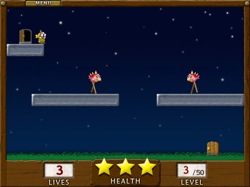
To: FILE
From: Studio Development Group
Date: June 16, 2008
RE: PUZZLE FARTER, 6/2/08 draft
We think this draft represents progress from the 5/01/08 draft, but there are still areas that need to be addressed to make this the strongest possible casual videogame. As always, we look forward to discussing these issues with you.
1. DEVELOPING THE CHARACTER ARC
We’re lacking a clear backstory and dramatic arc for Puzzle Farter. Why is this story happening to this character, now? Why is he so gassy? He is literally a fish out of water, but we never develop this idea.
Let’s consider PRETTY WOMAN as a template: Puzzle Farter is trying to navigate a world in which he doesn’t fit in, but in trying to understand it, reveals its absurdities. (And falls in love. See note #4.)
In this spirt, we’d like to consider adding an event (an “Inciting Incident”) early in the story, explaining how Puzzle Farter entered this world.
Also, Puzzle Farter needs to talk. He needs to clearly articulate his goals in a funny, relatable way. We see Joe Pesci for the role, but are open to other suggestions.
2. KEEPING PUZZLE FARTER PROACTIVE
Currently, Puzzle Farter spends much of his time reacting to outside pressures. We would like to find ways to keep him more in charge of the narrative — and for his decisions to have a deeper resonance in the story.
For example, right now, his only response to threats is to jump or run. Can we see him kill or otherwise incapacitate the other characters (hopefully in a charming way)? Like Grand Theft Auto 4, we’d also like to see a mission-based interface which would allow the character to explore on his own. (The “sandbox” model.)
Also, we’d like a system for keeping track of gold points.
3. CLARIFYING OBJECTIVES
The addition of doors to each level has gone a long way towards making it clear what Puzzle Farter is attempting to achieve in each encounter. But we’re missing a bigger goal: What is Puzzle Farter hoping to find? What is his want? What does he need? (The conflict between these two questions can contribute a lot of second-act gravitas.)
Let’s consider adding a Fish Sister, who is kidnapped in the prologue. This would go a long way towards strengthening our Villain Plot.
4. LOVE INTEREST
Puzzle Farter needs a love interest, someone who can match him toot for toot. We think Rachel McAdams would be perfect.
Also, players need to be able to select gender, so as not to eliminate the gay gamer demographic.
5. MULTIPLAYER
The game needs to be multiplayer. We should also discuss making it a MMORPG.
6. RATING AND CONTENT
To appeal to families, we need to be sensitive to content concerns. Let’s replace the farting with something less offensive.
The Writers Guild of America (WGA) determines who is the credited writer on a feature film. This is a Good Thing. It prevents studios, producers and directors from grabbing undeserved credit. But it makes for a lot of work and controversy within the Guild, because inevitably some writers will not receive credit they believe they deserve. It’s not just a matter of pride and bragging rights. Credits also determine who receives residuals.
For readers unfamiliar with how screen credits work, here’s the briefest introduction.
Let’s say you write a movie, and it gets made. If you were the only writer who worked on it, you get “Written by” credit, both on screen and in advertising.
If another writer was hired to work on the movie, then the two of you attempt to figure out who gets credit, possibly dividing up “Story by” and “Screenplay by” credit. For instance, you might take “Story by” while sharing the “Screenplay by” credit.1
What happens if you and the other writer can’t figure out a fair deal? Arbitration.
The Guild recruits three members (writers) to read all of the relevant drafts and determine who should get credit. Both the arbiters and the participating writers remain anonymous — the drafts are labelled “Writer A,” “Writer B,” etc.
It’s an exhausting and imperfect process, and the source of never-ending conversation among any gathering of more than three working screenwriters.
This week, the joint credits review committee of the WGAw and WGAE sent out three proposals for amending the credits process. They’re very modest, and don’t try to tackle any of the bigger and more controversial topics2
But they’re worth close examination.
1. Arbiter Teleconference In the Case of Non-Unanimous Decisions
The current manual states that each arbiter shall reach his/her decision independently of the other arbiters and that there shall be no conference among the members of the Arbitration Committee. The proposed change would allow for a Guild-hosted teleconference among the arbiters and the Arbitration Consultant in the event the Arbitration Committee is unable to reach a unanimous decision as to the appropriate writing credit. The identities of the arbiters would remain confidential during the teleconference. If a unanimous decision is not reached during the teleconference, the majority decision will be final.
Easy yes. I’ve served on several arbitrations that have resulted in split decisions, and would have greatly appreciated the ability to talk with the other two arbiters about how they reached their decisions and why. Did they notice something I didn’t? Is there something I could point out to them? Generally, these decisions come down to pretty small issues that merit discussion.
Currently, when arbiters are coming up with different credits, it falls on a WGA staffer to talk to each arbiter individually and see there is common ground to be reached. Not only is it inefficient, but it introduces an outside element to the decision.
A telephone conference call maintains the anonymity and autonomy of the process, and should result in better, quicker and more thoughtful decisions.
2. Eliminate Relaxed (“Any Substantial Contribution”) Standard
The current manual states that where a production executive or production executive team makes the requisite contribution to receive screenplay credit, the Arbitration Committee may — but is not obligated to — accord any other writer screenplay credit for “any substantial contribution,” without that writer meeting any specific percentage requirement. The proposed change would eliminate the relaxed standard and provide that the normal percentages apply, even where one of the participating writers is a production executive or a production executive team.
Yeah, my eyes glazed over too. It’s difficult to parse. So let’s break it down.
“Production executive” in this case means a producer or director, rather than a studio suit. So the proposal is talking about situations in which one of the participating writers on the project is also the producer or director. For sake of example, let’s call her WRITER B. 3
As the rules stand now, if Writer B gets credit, the arbitration panel may also award credit to any other writer who provides “any substantial contribution,” disregarding the normal percentage requirements.
This is weird.
You’re throwing out all the rules and asking the arbiters to possibly consider awarding credit based on an oxymoron (”any substantial”), without offering guidance as to why the special case exists.
My hunch is that the “any substantial contribution” clause was enacted to thwart a situation in which a writer-director (or writer-producer) rewrites someone else’s script so completely that the original writer would find it impossible to get credit based on real percentages.
Having been on both sides of arbitrations, I can tell you that it’s extremely unlikely for the original writer of a spec script to come out uncredited. But the real question is why this special case only kicks in when one of the writers is also a producer or director — a situation that already requires a higher threshold to receive credit — and why it doesn’t just apply to the original writer, but ANY writer who works on the movie.
It’s a weird, bad, dangerous precedent, and it should be changed. So I vote yes on the proposal.
3. Eliminate 60% Rule for Production Executive Teams
The current manual states that where a subsequent writer is a production executive team (i.e., one or more members of the team is a production executive), the team must contribute “substantially more than 60%” to receive screenplay credit. This rule applies even if one of the team members is not a production executive. The proposed change would reduce the threshold for a production executive team to receive screenplay credit from “substantially more than 60%” to “more than 50%.” The change would bring subsequent production executive teams into line with subsequent production executives who write alone, who are currently subject to a “more than 50%” requirement.
Again, not the easiest paragraph to read, but easy to agree with once you understand it. Let’s take it from the bottom to the top.
Currently, for a Production Executive (really, a writer-director or writer-producer) to receive credit, she must have contributed more than 50%. That’s higher than the threshold for non-production executives, which stands at 33%.
Currently, if a Production Executive is writing as a member of a team (for example, Todd McClever & Sarah Goodwit, of which Goodwit is the director), they need to show that they’ve contributed “substantially more than 60%.”
This doesn’t make sense.
Why should McClever’s presence change anything?
The proposal has it right: if we’re going to set a higher threshold for hyphenates, it needs to be consistent.
The upshot
All three get a “yes” from me.
But make no mistake: they’re very modest improvements. Over the next few years, the real discussion needs to be how to accurately and fairly recognize who wrote on a movie. The current credits system reflects failed attempts at social engineering, penalizing hyphenates and encouraging writers to make Hail-Mary attempts at credit through arbitration, since it’s the only way they’ll see their name on something.
For now, though, the committee deserves a thank you for presenting three proposals for patching glaring holes in the current setup.
When you see two writers names separated by “and” in the credits, that means they worked independently, as opposed to an ampersand (&), which denotes a writing team like Lowell Ganz & Babaloo Mandel. ↩
Foremost of these is the Catering Analogy. Currently, the guy who drives the catering truck has his name listed in the end credits of a movie, but a writer who spent months toiling on it gets no mention at all, even though her impact on the final product is much greater. ↩
For WGA credits, a writing team is treated as a single writer, so the same would apply if it were two writers working together. But note also proposal #3. ↩
At a USC forum last Saturday, a writer asked whether it was worth considering product integration when writing a script. She said her project would lend itself really well to a major brand like Starbucks.
I told her that I’d often heard plans of trying to bring advertisers in on the ground floor of a movie, but that it never seemed to work out. The gap between commercials and big-screen entertainment was just too wide.
A bunch of interesting questions have backed up in the queue, so let’s see how many we can get through while waiting for the new iPhone to be announced.
I’m currently outlining a spec feature, 98% of which takes place at the Superbowl. I’m on the fence about proceeding, however, because a few creative executives I’ve pitched the idea to were concerned about 1) the production costs and 2) the need to secure the NFL’s approval. One of the execs did say, however, if the NFL took to the script and got involved it would be a potential dealmaker.
While the production costs aren’t as much of a concern for me (given that those particular naysayers hadn’t gotten past the logline), the seeming make-or-break nature of the NFL’s involvement is a bit daunting. Before I take the plunge from outline to first draft, do you think it’s worth the risk?
– Patrick Los Angeles
Yes. If you believe in the story and the characters, go for it. If a producer or executive likes your script, she’ll be smart enough to the realize that the NFL of it all can be figured out. 1
At a USC workshop this weekend, a student asked me about writing a spec Alien vs. Predator. I gave him roughly the same advice — if you think you can write a kick-ass version of it, don’t let the potential unmake-ability of it deter you. My caveat to him was that in the case of AVP, it’s a really tired franchise, so you’re starting with a significant enthusiasm gap. Better to make your own mythology.
I’m about to re-write a script that I’ve been working on for a little while now. It’s a small character road trip drama in the spirit of 1970s American films (e.g. “Five Easy Pieces”, “Coming Home”, “Sugarland Express” — though not all films referenced there are road trip movies). This is my do or die draft — if it’s no good, then I will abandon it. But I’m hoping that some of your advice will help me avoid that outcome.
My concern is that too many of the scenes right now are overly reliant on dialog and I don’t want to tread into unnecessary exposition. At the same time, I want to be able to reveal character and backstory (and obviously, dialog plays a huge part in that). Do you have any general pointers on how to balance scenes (or sequences) of relatively quiet character moments, with the overall dramatic push that’s necessary to maintain tension? I want to make sure that both aspects remain compelling.
N.S. Los Angeles
There’s nothing wrong with dialogue scenes if they’re moving the story ahead, or enjoyable enough on their own merits. But I suspect you’re finding that a lot of your dialogue scenes are telling us backstory about your characters, and the thing is, we just don’t care.
That’s hard to hear, but you need to hear it: except for crucial, story-twisting revelations, we simply don’t need to know more about who your characters were before they walked on screen.
So before you start that next draft, take a red pen to any chunk of dialogue that isn’t about what’s happening now. Be brutal. I suspect you’ll find that you have a lack of action and some unclear goals that were hiding behind the chatter.
The movies you cited, along with more recent ones like Lost in Translation, Sideways and Little Miss Sunshine, are all good examples of movies that are talky without ever becoming expositional. Characters talk about what they want, what they fear, but they never dwell on what happened. And each movie finds moments to be quiet. Long stretches of each film play as montage, letting the characters do things without commenting on them.
Let’s say you’re working on a script that’s based on a musician. He’s a fictional musician, so you’ve never heard anything this guy’s produced. As the story unfolds, we watch him build up his song. Is it okay to include the song? Or would that just kill everything and shut the reader down? I guess what I’m asking is, do you include lyrics or just leave them out and hype him like he’s as great as the supporting cast says he is?
– James
Give us lyrics. You’ll want to abbreviate a bit — cut out chorus repetitions, for starters. But it feels like too much of a tease to omit the words altogether.
Often, when I am diligently working on a script, or close to being finished on a script, I find my mind and writing meandering to other ideas. For instance, I’ve written several drafts on a thoughtful spy movie and have an extensive set of notes (from peer review) I plan to implement. Instead of completing the script, I spend time thinking and making notes on new ideas — a drinking road trip film and a sentimental father-son story.
Is this a natural way for new and good ideas to develop or am I merely avoiding “finishing” a project for fear it will suck? Not being a professional, yet, I’m not bound by deadline to turn something in…but how does a disciplined, professional, writer deal with this issue of…distraction?
– Greg
The script you haven’t written is always better than the one you’re staring at, cursor blinking, its flaws so obvious that you can’t believe you ever started writing it. That doesn’t change over the course of a career. You will always want to be writing something else.
Look at your spy movie, and ask yourself, “If this script had just landed on my desk, would I be excited enough by the possibilities to do this rewrite?” If the answer is no, feel free to investigate one of your other projects.
Granted, there are times you’ll really need to force yourself to finish a new draft. For instance, if you’re getting paid, or if you’ve promised a draft to someone whose opinion matters. And don’t mistake pragmatism for laziness: If something is difficult but do-able, do it. Not only will you improve the script, but you’ll learn something in the process.
The time to move on is when reaching the “best version” of your script ceases to be interesting to you.
On the other hand, if she doesn’t like your script, the NFL factor is an easy explanation for why she’s passing. Which saves face for everyone. ↩
Between deadlines, travel and wedding plans, I haven’t had the chance to blog about this first batch of summer movies, and more importantly, What We Can Learn. So before I get any further behind, let’s pick three of the most notable films to date.
(Mild spoiler warnings throughout.)
Heroes are more important than villains
Iron Man spent 85% of its storytelling energy on Tony Stark. It had the requisite set pieces, all of which were well-staged, but for an action movie it didn’t really break new ground. Where it succeeded was in creating a funny, flawed hero who propelled the story by his own ambitions. He wasn’t just responding to outside threats.
Did the villain get short-changed? Yes — to the degree that his motivations didn’t really make sense. Did it matter? Not much. In order to better establish the villain, we would have needed to spend more time away from Stark, which would have been counter-productive.
The lesson: There’s no equal-time rule for antagonists.
Leo ex machina
Price Caspian featured a terrific and surprising defeat at the movie’s mid-point, which gave me hope that the movie would transcend its kid-lit roots. But when another lengthy battle sequence1 also ended on the south side of success, my worst fears were confirmed: the fricken lion suddenly showed up to save them. And teach them humility. Or something.
Yes, I know: it’s a Christian parable. But that doesn’t make it any less maddening. If it weren’t based on a famous book, no screenwriter would ever get away with that ending.
The lesson: Let your heroes succeed or fail on their own merits.2
Why is he doing that?
I don’t want to pile on the Indiana Jones and the Kingdom of the Crystal Skull hate-parade. But beyond the tonal issues, I was often at a loss to say why Indy was doing what he was doing. Is he trying to take the crystal skull to the cave, or keep it out of the cave? Does he think Mac is a traitor, an ally, or not really care one way or the other? (Sadly, I think the last option is probably correct.)
It’s this kind of granular motivation I’ve written about before. It’s not psychoanalysis. It’s making sure the audience understands what’s happening in any given moment, so they can anticipate what might happen next. Without this ability to anticipate, the audience is just flung around helplessly, wondering why the great Indiana Jones is just standing there watching special effects.
The lesson: Every scene, every moment, ask the question: What is my hero doing, and why? If it’s not obvious, stop and rethink it.
I call shenanigans on that PG rating. It may be the most violent “family” movie ever. ↩
And without interference by supernatural beings who could have shown up in the first reel, sparing a few hundred lives. Thanks. ↩
I have been tossing around an idea for an animated feature film. I have a ton of notes, character breakdowns, beat sheets, outlines, etc., etc. Now its just a question of putting it down on the page. My question is fairly simple and straight-forward: Am I wasting my time?
I’ve read that writing specs for animation should be avoided, as the big animation studios typically take pitches, ideas, and submissions internally. Is this the case?
I know you are credited on Corpse Bride and Titan A.E. I’m assuming those were both work-for-hires. But what do you think about specs?
– Jack Mulligan
Go ahead and write it. It’s very unlikely that an animation spec will get sold and produced, but remember, that’s not the only goal of writing a spec. You write specs to get your next job, and if you can write a great animated spec, do it.
Both Titan A.E. and Corpse Bride were rewrites of movies already close to production. In both cases, I didn’t need to write at all differently than live-action. There were small semantic changes — in animation, you number for sequences rather than scenes — but when reading the script, you wouldn’t necessarily know that it was going to be animated rather than live-action. So don’t freak out about some special formatting you see in a printed script or guidebook. Just write it like a normal feature.
Last year, I had a meeting with Disney Animation, in which they talked through all of their upcoming projects. It’s clear they really develop in-house, and aren’t searching the town for new material. And I suspect that’s true for all of the majors.
But the animated spec you write could be a great sample for live action, particularly if it showcases comedy and set-pieces. If you write Shrek, you can write funny, and someone will want to hire you.
I have a question about formatting for a script I’ve been working on. The concept involves some scenes being completely silent, but with an occasional sound coming through (i.e. everything’s silent, including speech, until someone breaks a glass and the shattering is audible).
I’ve tried a couple of different methods of formatting this but I’m not sure what makes the most sense. In early drafts, I just designated the scene as “Silent” at the beginning and capitalized the sounds that broke through. My writers’ group found this to be strange so in my latest draft I tried it with “M.O.S.” attached to every action that was supposed to be silent, but they didn’t like that either.
So now I’m kind of stumped on how to translate this idea to the page. Is there a way to format it that makes sense? I want it to be as clear as possible to readers.
– Cali Seattle
My hunch is that you are doing too much, and it’s slowing down the read. A modern screenplay isn’t a list of camera angles and sound cues. It reads more like journalistic, present-tense fiction. (Think Hemingway, not Faulkner.)
If certain scenes are going to be silent, and other ones aren’t, my inclination would be to flag them in the scene headers, the same way you call out special events like [RAINING] or [DRIVING]. So in your case…
INT. KITCHEN - NIGHT [SILENT]
Within scenes, putting those few audible sounds in UPPERCASE makes sense. Remember, treat your readers like audience members, and think about it from their perspective.
For example, in the second pilot Jordan Mechner and I wrote for Ops, we had an extended sequence with no natural sound. It was important to showcase why this was going to be cool:
INT. KIDNAP SHACK - DAY
Brilliant shafts of sunlight burst through the corrugated metal walls of the shack. We don’t hear the gunshots or the hits — we simply watch as the holes open up.
Under the cot, Dagny is screaming, but we don’t hear it — we only see her open mouth.
EXT. JUNGLE - DAY
Only now do we see Gonzales and his men silently firing, emptying the clips of their fully-automatic rifles.
INT. KIDNAP SHACK - DAY
Vanowen is flat on the floor, looking out through a broken board. Sweat is dripping into his eyes, but he stays rock-solid.
EXT. JUNGLE - DAY
Gonzales signals for his men to stop. They listen. One man takes a few steps to his right.
INT. KIDNAP SHACK - DAY
Vanowen squeezes the .45 trigger. This SINGLE SHOT is deafening. (At this point, normal SOUND RESUMES.)
Look at your silent scenes from your reader’s perspective, and try to read them without knowing what’s happening next. You’re not nearly as curious what is sounds like as what it feels like to have the sound missing. Write that.


. The last three come from watching Ni Hao, Kai-Lan with my daughter. ?
 I’m currently outlining a spec feature, 98% of which takes place at the Superbowl. I’m on the fence about proceeding, however, because a few creative executives I’ve pitched the idea to were concerned about 1) the production costs and 2) the need to secure the NFL’s approval. One of the execs did say, however, if the NFL took to the script and got involved it would be a potential dealmaker.


